Castor Oil: From Egyptian Tombs to Your Bathroom Shelf
Some beauty rituals are new. Some are ancient. And some like castor oil, have been quietly doing their work for four thousand years, waiting patiently in dark glass bottles for us to remember what the Egyptians already knew.

When archaeologists opened Egyptian sarcophagi, they found more than mummies and gold. They found castor oil, sealed in vessels, placed deliberately alongside the dead for their journey into the afterlife. It wasn’t decorative. It was essential. The Egyptians used it for everything: lamps, skin, hair, medicine. Four millennia later, we’re still reaching for the same thick, golden oil, still marvelling at how deeply it goes.
This isn’t a trend. It’s a rediscovery. And if you’ve ever smoothed castor oil onto your lashes before bed, or wrapped a warm compress around your belly, you’re part of a tradition that stretches back to the beginning of recorded beauty.
The Plant That Holds a Paradox

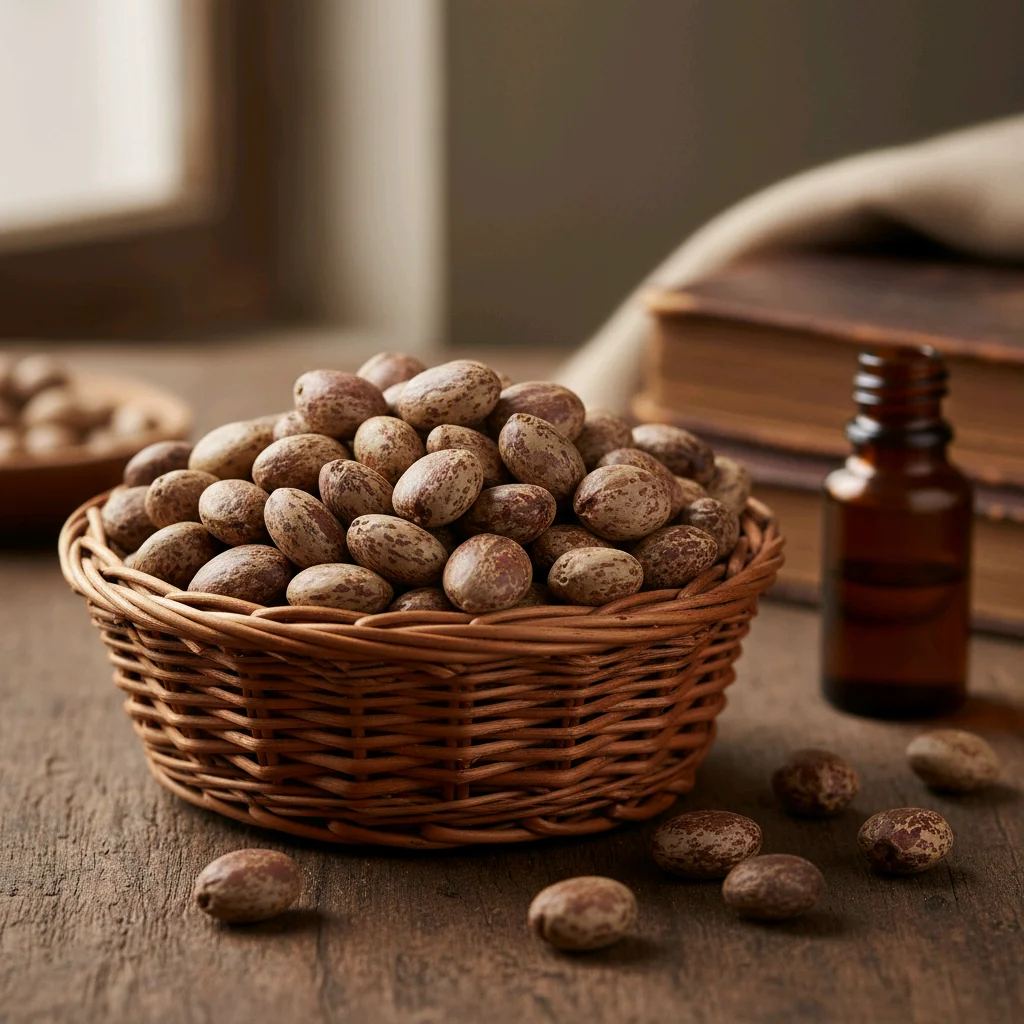
Castor oil comes from the seeds of Ricinus communis. A plant that’s simultaneously poisonous and profoundly healing. The seeds contain ricin, one of nature’s most potent toxins. As few as five to ten micrograms per kilogram can be lethal. Chewing raw castor beans is genuinely dangerous.
But here’s the beautiful bit of chemistry that makes castor oil safe: ricin is a protein. It doesn’t dissolve in oil. When the seeds are cold-pressed, the ricin stays behind in the leftover seed cake — the solid mash that gets discarded. The oil itself is then heated gently to more than 80°C during clarification, which denatures any trace protein that might have slipped through. What you’re left with is pure, safe, golden oil. No ricin, just ricinoleic acid.
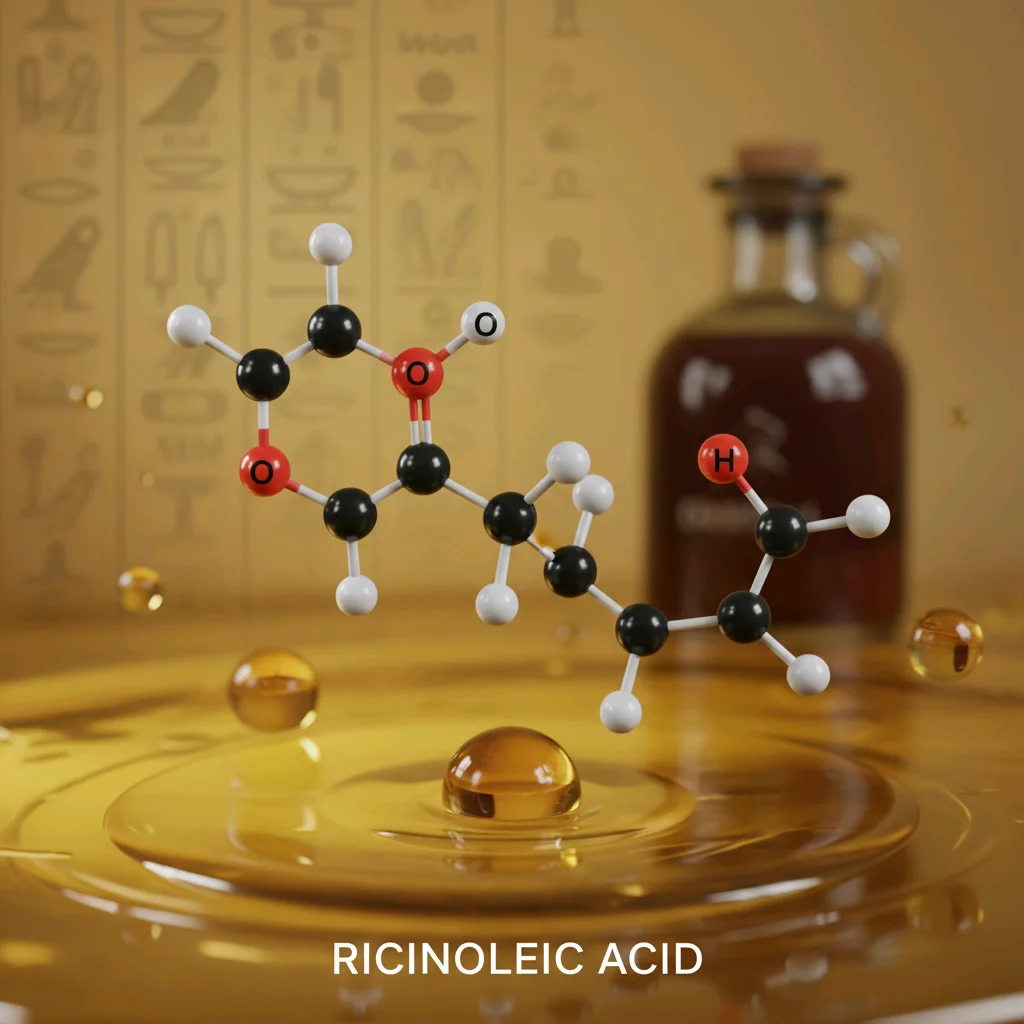
Ricinoleic acid is castor oil’s signature. It makes up around 90% of the oil’s fatty acid profile, and it’s rare. You won’t find it in almost anything else in nature. That single molecule is what gives castor oil its thick, viscous texture, its unusual ability to penetrate deeply, and most of its anti-inflammatory reputation.
So the poison is in the bean pulp, never meaningfully in the finished oil. Which is exactly why you buy oil from a reputable maker and never press seeds at home.
A Journey Through Cultures
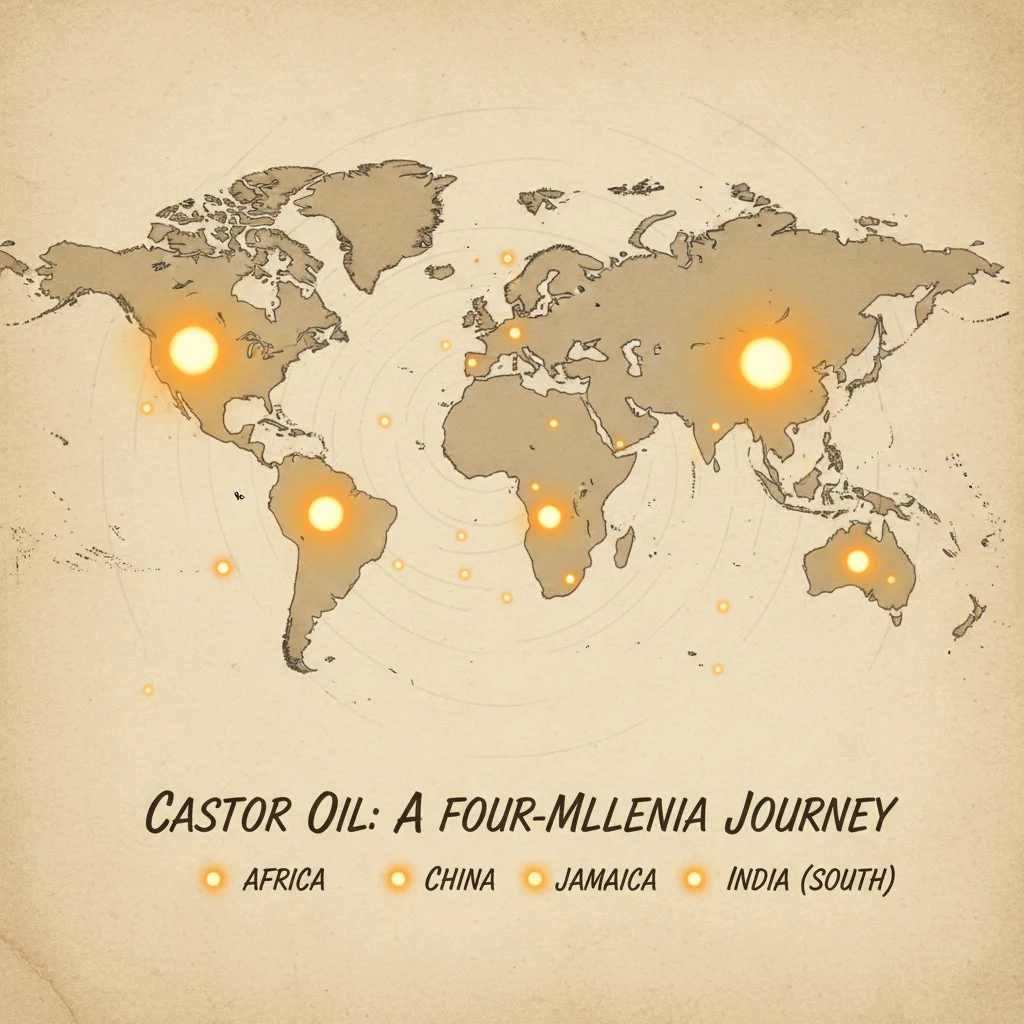
The Egyptians weren’t alone in their devotion. Castor oil travelled. In ancient India, it appeared in Ayurvedic texts as ‘eranda,’ used internally as a purgative and externally for joint pain and skin conditions. Traditional Chinese medicine knew it too. In the Caribbean, particularly Jamaica, the oil took on a new form: roasted, boiled, infused with ash, thick and dark — Jamaican Black Castor Oil became a staple for scalp health and thick, coily hair.
By the 20th century, castor oil had earned a peculiar dual reputation in the West. On one hand, it was the dreaded spoonful children were forced to swallow as a laxative — effective, yes, but deeply unpleasant. On the other hand, healers and herbalists never stopped using it topically. Rosemary Gladstar, in her book Herbs for Natural Beauty, calls it ‘highly emollient, soothing, thick and viscous… good for dry and mature skin, and especially for eczema, psoriasis, and rough areas around heels and elbows.’ She notes its traditional use in compresses ‘to help dissolve cysts.’
Then came Edgar Cayce, the ‘sleeping prophet’ who in the early 1900s began recommending castor oil packs in his psychic readings, particularly for liver support and abdominal complaints. Dr. William McGarey, a physician fascinated by Cayce’s work, spent decades researching castor oil packs and wrote The Oil That Heals. McGarey reported that, used properly, castor oil packs improve thymus and immune function by increasing lymphocyte production, which speeds removal of toxins from the tissues.
Today, voices like Barbara O’Neill have brought castor oil back into the spotlight. In her book Self Heal By Design, O’Neill uses castor oil compresses over the liver as part of her liver cleanse protocol. Her words: ‘Castor oil penetrates deeper than any other oil and has the ability to break up lumps, bumps and adhesions… it can soften and break down the gallstones as well as lubricating the bile duct.’ She recommends wearing the compress over the liver area for at least five hours a day.
The tradition is powerful and time-tested. The modern science is catching up.
What the Science Actually Says
Here’s where it gets genuinely interesting. A 2012 study published in PNAS (Tunaru et al.) showed that ricinoleic acid activates prostaglandin EP3 receptors, a mechanism that explains its anti-inflammatory and analgesic effects. Ricinoleic acid is anti-inflammatory, pain-relieving, and antimicrobial, helping reduce local inflammation and support the skin and mucosal barriers.
For skin, castor oil is highly emollient and unusually penetrating. It’s a humectant too — it draws and holds moisture. The Natural Soap Book includes a beautiful line: castor oil ‘is absorbed quickly by the body. In its presence, other, less easily absorbed materials are more likely to be absorbed’ — meaning it acts as a carrier that drives other active ingredients deeper.
For hair and lashes, the fame is well-earned. Ricinoleic acid, along with omega-6 and omega-9 fatty acids, nourishes the follicle. The oil’s thick, occlusive quality reduces breakage and protects the scalp barrier. Let’s be honest, though: castor oil’s effect on hair growth is modest and requires consistent use over months. It doesn’t transform a hairline overnight. It supports scalp hydration, reduces breakage, and genuinely improves lash and brow fullness. But it won’t reverse genetic hair thinning. Real for strength, shine, and resilience. Supportive, not miraculous.
The deeper tradition, the liver packs, the lymphatic support and the ‘detoxifying’ claims sits largely in the realm of traditional use and anecdotal experience. The anti-inflammatory mechanism is solid. The lymphatic-drainage evidence is mostly from animal studies, which means we can’t make firm human recommendations from it alone. But the practice is centuries old, and the testimonies are compelling.
So: the science supports the anti-inflammatory action. The tradition supports the rest. And sometimes, tradition knows things science is still catching up to measure.
My Own Love Affair With Castor Oil
I first came across castor oil through Barbara O’Neill, her castor oil pack videos, the way she explained how to wrap your body in warmth and let the oil do its quiet work. I tried it. And the effect was stunning.
My skin became smoother, happier. I had a cyst on my thigh, one of those stubborn lumps that sits under the skin and refuses to budge. I applied castor oil every night. After a few days, it completely disappeared.

I struggled with my lymphatic system for years, poor circulation, swelling, pain in my right knee. Castor oil compresses, mixed with a pinch of cayenne pepper, brought genuine relief. I used it over my thyroid too. I could feel it working, warmth, movement, something shifting in my throat.
Then I started experimenting with it in my formulations. I added it to hair masks. My hair drank it in. The structure changed, thicker, stronger. I’d never managed to grow my hair so long.
And the lashes. Oh, the lashes. I have what I used to call ‘Eskimo lashes’ short, pale, barely there. The first time I applied castor oil nightly, I could actually see them grow. Longer, thicker, healthier. It was the most visible change of all.
Wrinkles that had been deeply etched softened. My belly button ritual, a few drops of oil massaged in before bed, became something I looked forward to. I was experimenting, yes, but I was also falling in love.
Castor oil became one of those ingredients I couldn’t imagine formulating without. It goes so deep. It carries everything with it. It feels like it’s holding a conversation with your body.
The Three Types: And Which One to Choose
Not all castor oil is the same. There are three main types, and knowing the difference matters.
Regular cold-pressed castor oil is pale gold, slightly acidic (pH around 4.5–5.5), with a mild, nutty scent. It’s extracted from raw castor beans by cold pressing, no high heat, no roasting. This is the versatile one. Best for face, lashes, blending with other oils, and daily use. It’s gentle, penetrating, and beautifully pure.
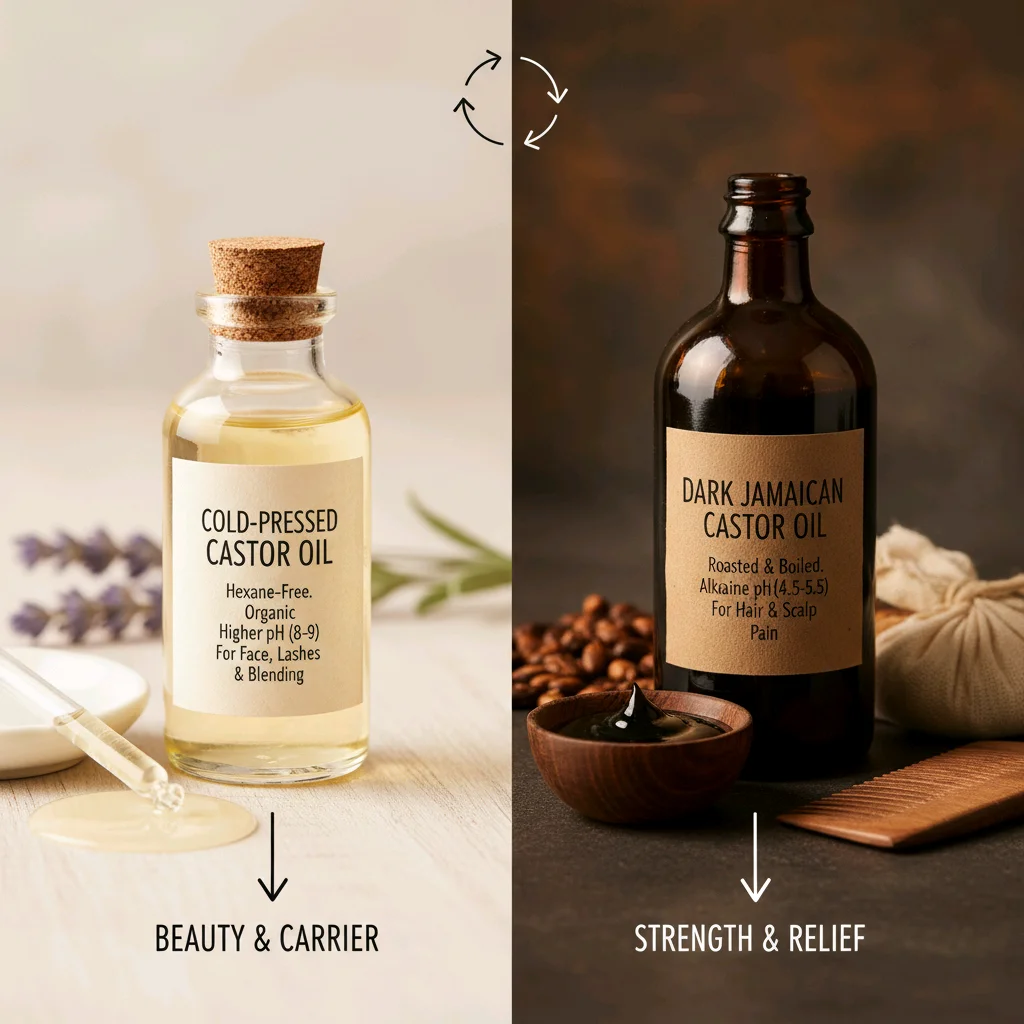
Jamaican Black Castor Oil (JBCO) is darker, thicker, and carries a smoky, slightly burnt scent. The beans are roasted first, then crushed and boiled. The ash from the roasted shells infuses the oil, raising the pH to around 8–9 — alkaline instead of acidic. That higher pH is believed to help open the hair cuticle, aiding nutrient absorption by the scalp. JBCO is favoured for scalp massage, thick or coily hair, and deep conditioning. The downside? The smoky scent isn’t for everyone, and the alkalinity can be more irritating on sensitive or acne-prone skin. Cold-pressed is usually gentler for the face.
Be honest: many users report they can’t tell a real difference in hair-growth results between regular and black castor oil. Both deliver ricinoleic acid. The ‘ash is superior’ claim is traditional belief, not proven science. Choose based on what your skin and hair respond to, not hype.
Refined or solvent-extracted castor oil is the one to avoid. It’s clear, odourless, cheap. Some manufacturers use hexane, a petroleum-derived solvent, to squeeze more oil from the pulp. The solvent ‘evaporates off,’ but that’s not the same as completely removed. Trace residues can remain. And the refining process that removes the solvent also strips away some of the beneficial compounds you actually want. It may look clean, but it’s been compromised.
How to Spot a Genuinely Good Bottle
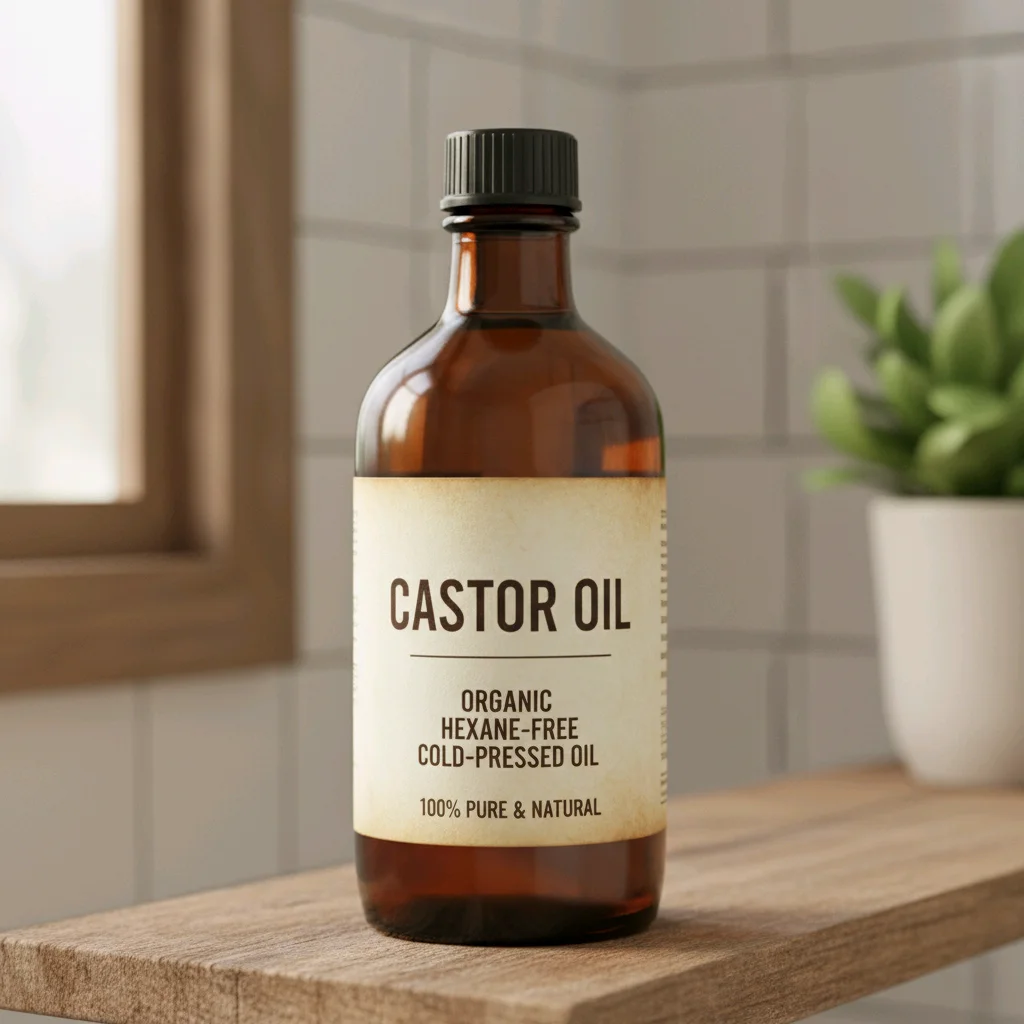
This is the practical wisdom that will save you money and disappointment. A quality castor oil shows all of these markers on the same label:
- Cold-pressed: extracted below 49°C, which preserves delicate nutrients and fatty acids. Expeller-pressed allows higher heat that can damage beneficial compounds.
- Hexane-free: explicitly confirms no petroleum solvent was used. Hexane is a neurotoxin; even trace amounts aren’t something you want near your face.
- Organic (ideally certified): covers how the beans were grown. Note: organic certification covers the farm, not always the extraction process with the same rigour. So you want cold-pressed and hexane-free confirmed separately.
- Dark glass bottle (amber or cobalt): never clear plastic pure unrefined oils are light- and heat-sensitive. Dark glass shields from UV and preserves potency. Clear plastic is a serious red flag.
- One ingredient only: the label should read just ‘castor oil’ or ‘Ricinus communis seed oil.’ No added fragrance or filler oils.
- The right look and feel: cold-pressed oil has a slight natural scent and a pale yellow tint. Refined oil is clear and nearly odourless. Fresh oil smells mild and slightly nutty; rancid smells off.
- Slow viscosity: if you can see through the glass, the oil should move slowly and thickly.
- Batch number and date: a sign of a transparent maker who stands behind their product.
Most of the world’s castor oil is grown in India, where the plant has been cultivated for centuries. Brazil and parts of Africa also produce high-quality oil. Origin matters less than extraction method and storage.
The Magic of Regular Use
Castor oil isn’t a one-off miracle. It’s a slow, steady companion. Barbara O’Neill recommends daily use, especially for packs over areas of pain, cysts, or congestion. She wears her liver pack for at least five hours a day during a cleanse.

For lashes and brows, nightly application, just a tiny amount on a clean spoolie or fingertip, is the rhythm that brings results. For hair, a weekly or fortnightly mask left on for at least an hour (or overnight) builds strength over time.
For skin, you can use it daily. A few drops massaged into damp skin, or mixed with your favourite serum or balm. It’s safe, gentle, and deeply nourishing, though I’m not a doctor, so I can’t give you medical advice. I can only share what the specialists recommend and what I’ve lived myself.
What I know for certain: castor oil rewards consistency. It doesn’t shout. It whispers. And if you listen, if you keep showing up with your dark glass bottle and your quiet ritual, it will show you what the Egyptians already knew four thousand years ago.
Some things don’t need to be reinvented. They just need to be remembered.